What Is Biryani? Why Every Region Cooks It Differently
Biryani is rice and meat layered and sealed to cook in its own steam. How Hyderabad, Lucknow, Kolkata and Kerala make it, and where to get it in Victoria.
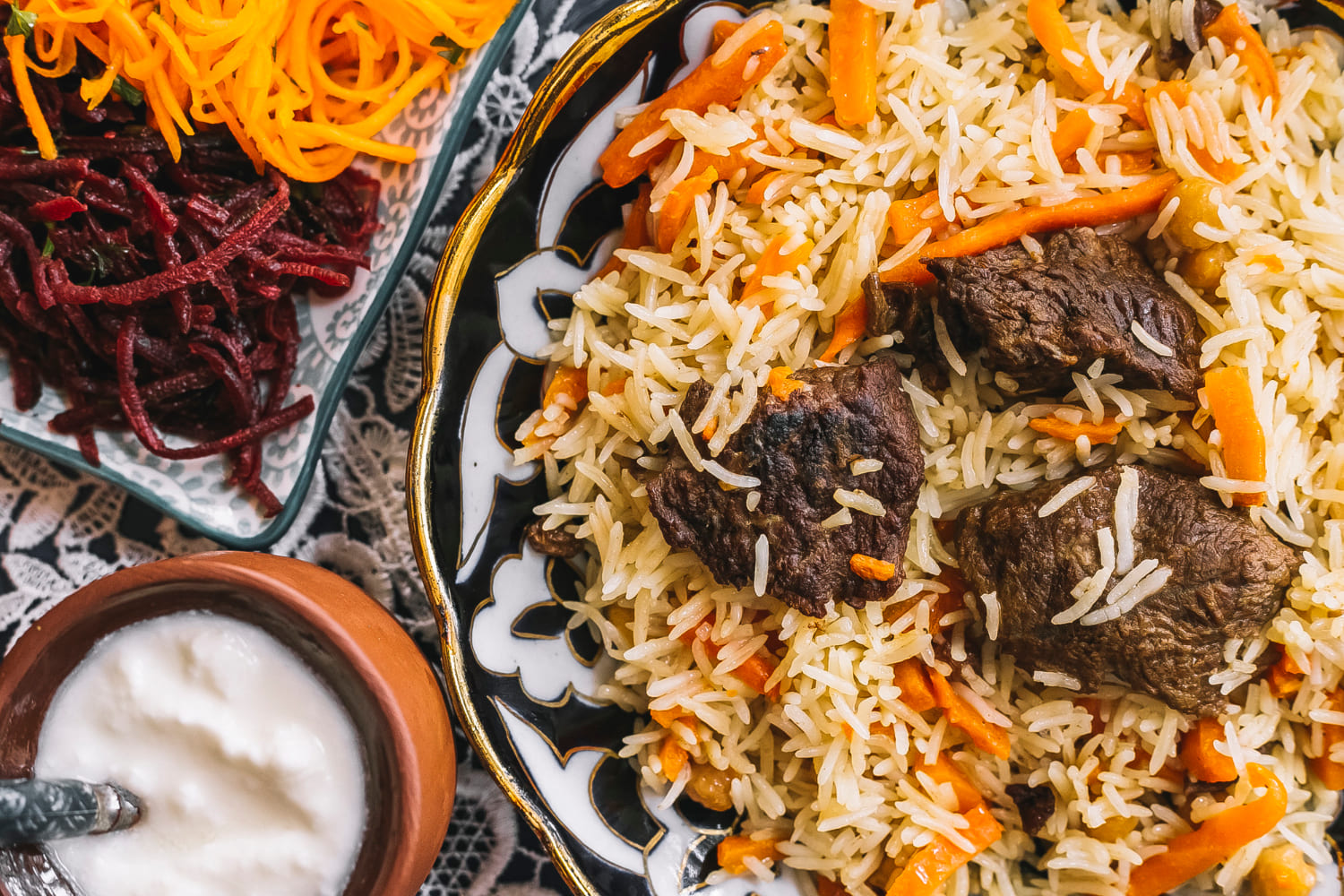
Biryani is rice and meat cooked in layers, sealed in a pot and finished in their own steam. It is less one recipe than a method, and every region that took it up changed something. Two choices separate one biryani from another before a spice is measured: whether the meat goes in raw or cooked, and which rice goes on top.
Ask five people from five parts of India which biryani is the real one, and you'll get five sincere answers. Here is what each of them means, and where to order biryani in Victoria.
Kacchi and pakki: the split before the spices
In a kacchi biryani, raw marinated meat goes into the pot first, under a layer of rice that is only about 30% cooked. In a pakki biryani, the meat is cooked with its spices first and layered between rice that is about 80% done (Gulf News). Kacchi is the harder one to get right: the meat and the rice have to finish at the same moment, in a pot you can't open to check.
Both end the same way, sealed and left on a low fire. Dum means "breath", and Platts' Urdu dictionary defines dam-pukht as "a stew or soup cooked in a pot the mouth of which is fast closed with paste" (Platts). The dough seal traps the steam, so the rice cooks in the meat's juices rather than in added water.
Hyderabad and Lucknow: kacchi against pakki
Hyderabadi biryani is the best-known kacchi. Tradition traces it to the kitchens of the first Nizam of Hyderabad, Asaf Jah, who ruled from 1724 to 1748 (Gulf News): raw meat in yogurt and spice under half-cooked rice, sealed together.
Lucknow's Awadhi biryani is the classic pakki, with the meat cooked before it meets the rice. Each city will tell you its own is the original. Order both and settle it at your own table.
Why Kolkata biryani has a potato in it
Kolkata biryani is milder again, and famous for a whole potato buried in the rice. Tradition credits the kitchen of Wajid Ali Shah, the last Nawab of Awadh, who was deposed in 1856 and settled at Metiabruz, on the edge of Calcutta. The usual story says he could no longer afford much meat and his cooks stretched it with potatoes.
Historians doubt it. His biographer Rosie Llewellyn-Jones found him spending 9,000 rupees a month on food for his animals, "anything but poor" (LiveHistoryIndia). One of his descendants says the potato was an exotic vegetable at the time, added as a luxury, not a saving (Hindustan Times). Whatever put it there, nobody in Kolkata is taking it out.
Malabar biryani: a different rice
On Kerala's Malabar coast, Thalassery biryani is made with jeerakasala rice, a fragrant, small-grained rice rather than long basmati (Kerala Tourism). Wayanad Jeerakasala rice is protected as a geographical indication in India, like Champagne in France (IP India).
In Victoria, Daily Fresh Super Market makes a with halal chicken and whole spices, served with a boiled egg. Its listing says it uses basmati, so it's Malabar in the spicing rather than the grain.
Malabar-style biryani
Daily Fresh Super Market · Victoria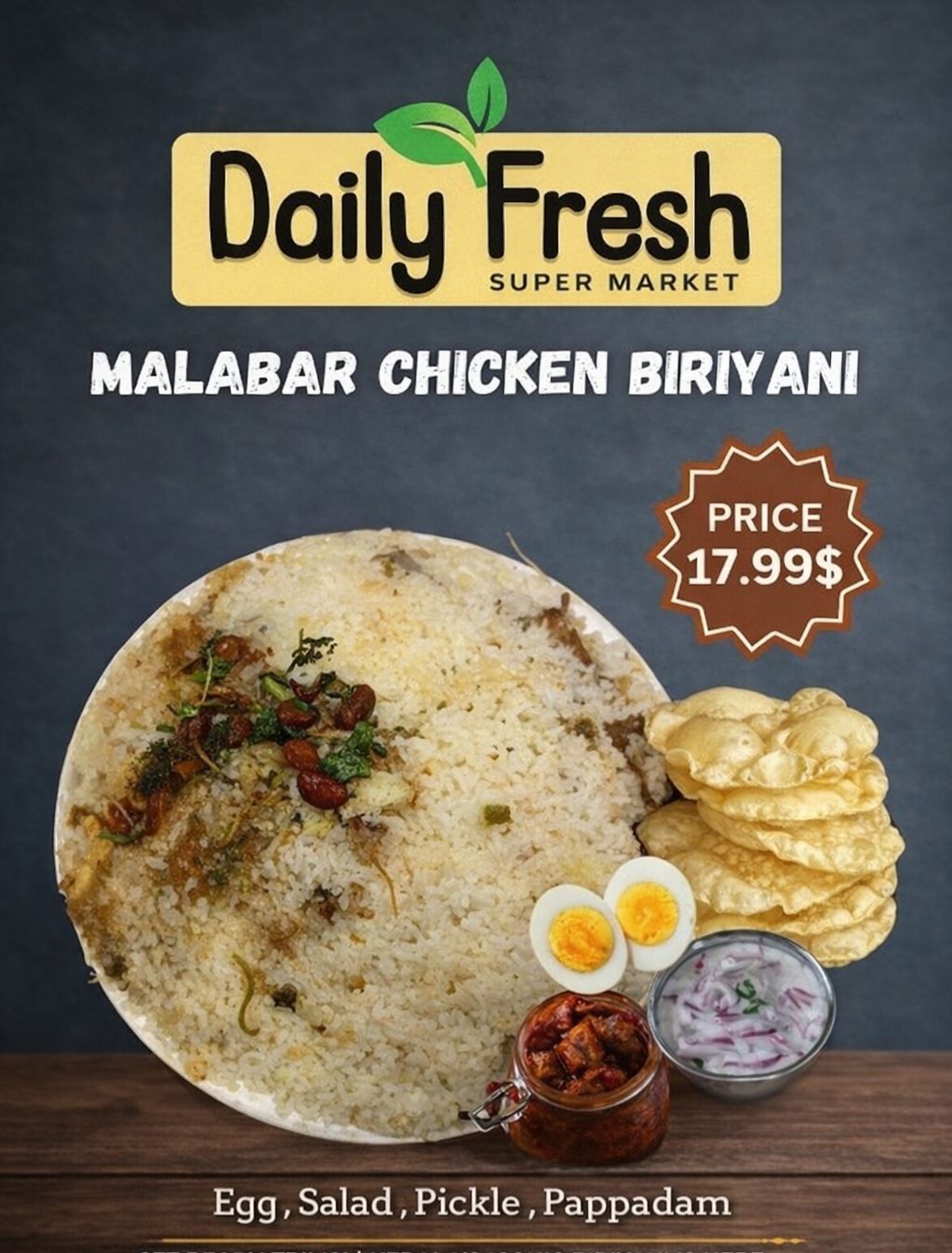
Where to order biryani in Victoria
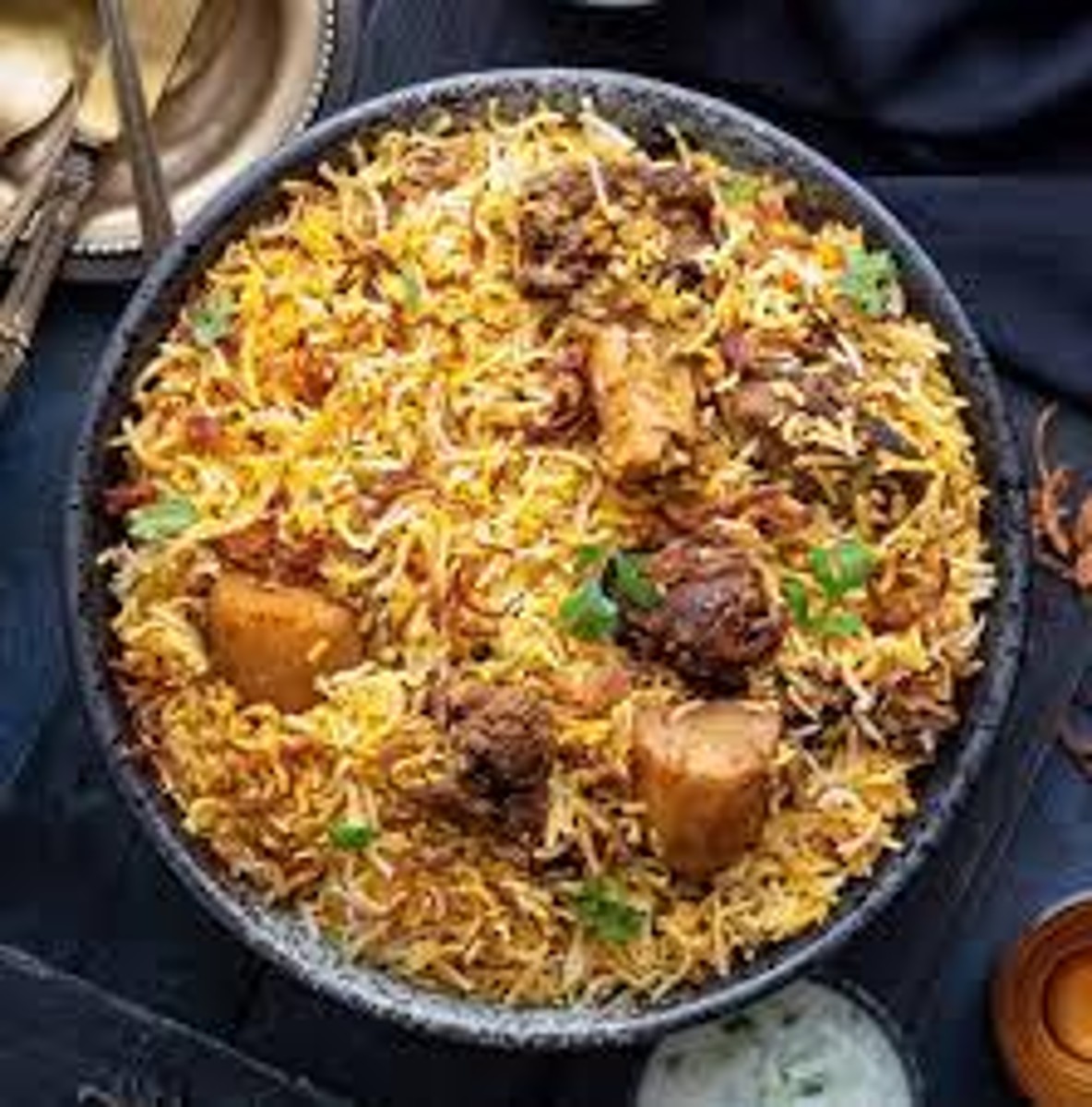
Royal Spice Indian Cuisine makes , and , and marks them gluten-friendly on its menu. Il Greco, a pizzeria and kebab house, also makes a , and an Afghan , if you want to taste the difference between the two families side by side.
Biryani from Royal Spice
Royal Spice Indian Cuisine · Victoria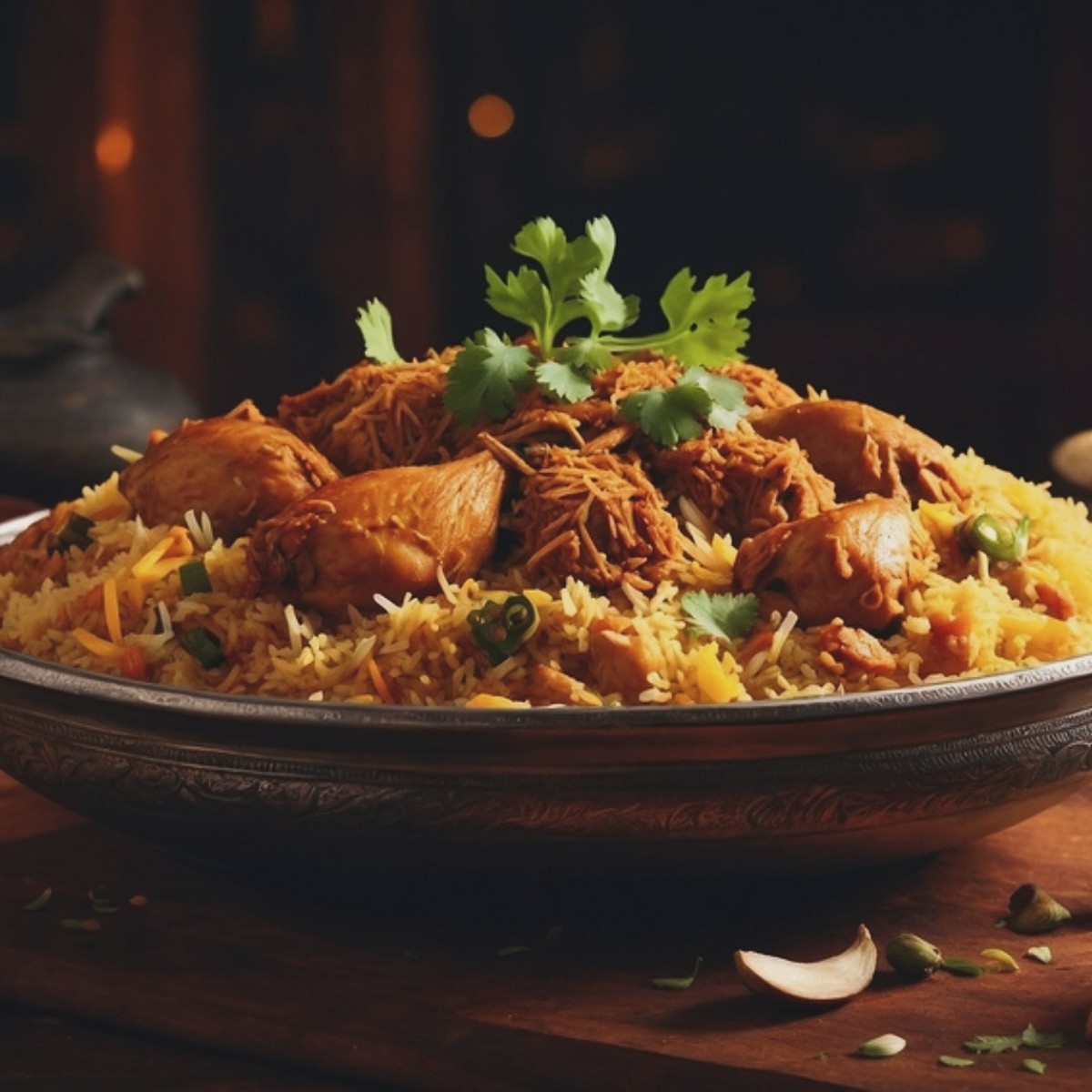
Good to know
What is the difference between biryani and pulao?+
Biryani is cooked in layers: meat and part-cooked rice are stacked and sealed to finish in their own steam. Pulao, or pilaf, cooks the rice in one pot with stock and spices, often with the meat mixed through rather than layered, and is usually the simpler dish of the two.
What does dum mean in biryani?+
Dum, from the Persian and Urdu word for breath, is the final slow cooking of a biryani in a pot sealed with dough or a tight lid. The trapped steam finishes the rice and meat together, so the rice absorbs the juices and aromas instead of added water.
Why is there a potato in Kolkata biryani?+
Tradition credits the kitchen of Wajid Ali Shah, the last Nawab of Awadh, who settled in Kolkata after 1856. The popular story that he added potatoes to save money on meat is widely doubted by historians; potatoes may have been a prized, exotic vegetable at the time.
What rice is used in biryani?+
Most biryani is made with long-grain basmati, which cooks up firm and separate. Malabar or Thalassery biryani from Kerala traditionally uses jeerakasala, a small-grained aromatic rice. Check the listing if the rice matters to you: some Malabar-style biryanis are made with basmati.